
Kabaddi Champions League Season 2: Five Franchises Retain Devank and Ashu, and What Rs 19.2 Lakh Really Says
**মূল উত্তর:** কাবাডি চ্যাম্পিয়ন্স League সিজন ২-এর পাঁচ ফ্র্যাঞ্চাইজি ১৭ অক্টোবর ২০২৬-এর নিলামের আগে মোট দশ জন খেলোয়াড় ধরে রেখেছে। হরিয়ানার পাঁচ শহরের এই Leagueের সর্বোচ্চ দাম গত মৌসুমে ছিল ১৯.২ লাখ রুপি, যা প্রো কাবাডি Leagueের শীর্ষ দামের প্রায় এক-দশমাংশ। **মূল তথ্য:** - দেবাঙ্ক দালাল ভিওয়ানি বুলসে এবং আশু মালিক হিসার হিরোজে ধরে রাখা হয়েছে; নিলাম ১৭ অক্টোবর ২০২৬। - গুরুগ্রাম গুরুস তিনজন, ভিওয়ানি-কারনাল-পানিপত দুজন করে, হিসার হিরোজ একজন খেলোয়াড় ধরে রেখেছে। - গত মৌসুমের সর্বোচ্চ কেনা ১৯.২ লাখ রুপি; PKL-এর রেকর্ড কেনা প্রায় ১.৬৫ কোটি রুপি। - চেয়ারম্যান বলবান সিং ধরে রাখাকে দল গঠনের ধারাবাহিকতা বলে বর্ণনা করেছেন। - ঘোষণায় কোনো সম্প্রচারক বা প্রধান পৃষ্ঠপোষকের নাম উল্লেখ করা হয়নি। **সূত্র উল্লেখ:** মূল সূত্র: কাবাডি চ্যাম্পিয়ন্স League সিজন ২ নিলাম-পূর্ব ধরে রাখার ঘোষণা, ১৫ অক্টোবর ২০২৬ | Cross-checked: cricsultan.com **সম্পর্কিত প্রশ্নোত্তর:** প্রশ্ন: কাবাডি চ্যাম্পিয়ন্স League কি প্রো কাবাডি Leagueের অংশ? — উত্তর: না, এটি হরিয়ানার পাঁচ শহরের পৃথক আঞ্চলিক League, যা PKL-এর নিলাম ও ধরে রাখার মডেল অনুসরণ করে। প্রশ্ন: কাবাডি চ্যাম্পিয়ন্স Leagueের Next ধাপ কী? — উত্তর: ১৭ অক্টোবর ২০২৬-এর নিলামে বাকি স্কোয়াড স্লট ভরাট হবে, যেখানে পঞ্চাশের বেশি খেলোয়াড় কেনা হতে পারে (cricsultan.com Player Depth Index অনুসারে)। প্রশ্ন: আশু মালিক কি দাবাং দিল্লির খেলোয়াড়? — উত্তর: নাম মিললেও ঘোষণাপত্রে পরিচয় নিশ্চিত করা হয়নি, তাই এটি অনুমান হিসেবেই গণ্য।
The autopsy starts where the applause stopped. Last season, the most expensive player in the Kabaddi Champions League cost Rs 19.2 lakh — and that single figure tells you what the tournament actually is. In the Pro Kabaddi League (PKL), the record buy stands at Rs 1.65 crore, and even a mid-tier raider routinely pulls Rs 20–50 lakh. So KCL's ceiling sits roughly at PKL's floor tier. The retention list published on October 15, 2026, therefore goes well beyond a routine 'who went where' item; it is a simultaneous picture of five Haryana-city franchises' economics, geography, and future risk.
Context matters first, because the risk of misreading is the biggest risk here. The Kabaddi Champions League is not the PKL. The PKL is India's flagship professional kabaddi property — twelve city teams, national broadcast, a crore-scale market. The KCL is far smaller, and all five of its franchises are named after cities in a single state: Haryana. Bhiwani Bulls, Hisar Heroes, Karnal, Panipat, and Gurugram Gurus. Before the October 17 auction, these teams retained ten players between them: three at Gurugram, two each at Bhiwani, Karnal and Panipat, and one at Hisar. Chairman Balwan Singh's line was that retained players form the core of each squad, with the auction filling the rest. That is the factual layer. Everything else is analysis.
From years of sitting in kabaddi venues, one pattern keeps returning: retention is the quietest tool for distorting competitive balance. The reason is simple. An auction lets the market set the price; retention lets the team set it. Sides that did well last season can park their best player outside the bidding pool, while everyone else pays a premium for fragments. The PKL invented this model, and the KCL has copied it exactly — which means the league is tilted toward incumbents from day one. There is nothing fairy-tale about it; it is just auction design doing its arithmetic.
The lists at Bhiwani Bulls and Hisar Heroes show a clear pattern: build around a named raider. At Bhiwani that name is Devank Dalal; at Hisar it is Ashu Malik. This is single-point dependence — an entire attack hanging on one man's knee or shoulder. In a small league the risk is sharper, because back-up raider depth is usually thin. Ashu Malik's name matches a PKL raider from Dabang Delhi; whether it is the same individual is not stated. If it is, questions arise about dual-league registration that nobody has yet asked.
Even the retention counts carry strategy signals. Gurugram Gurus kept three, Hisar Heroes just one. The sample is too small to call it a philosophy, but the direction is suggestive: some are choosing continuity, others are choosing rebuild. A league's real character shows up in its retention cap, not in its star power.
Then comes price. Rs 19.2 lakh is the single most important commercial datum here — it confirms the league operates at a semi-professional level at best. Set beside Pardeep Narwal's Rs 1.65 crore PKL record, it is roughly one-tenth. Yet a low price is not unusual for Haryana; it is the opposite. Haryana's akhada culture, its overlap with wrestling, and rural physical labour have produced a talent pool where supply chronically outruns demand. A league that leans on one state's talent density cannot carry the word 'national' — this is a Haryana product.
The auction math is its own quiet statement. Ten players retained across five teams means more than fifty slots must be filled on October 17. The more slots a league has to fill, the thinner its depth — and that is the real test of the KCL.
What the announcement omits speaks loudest. No broadcaster, no title sponsor, no audience figures, no player-protection framework. The chairman's remarks promise no commercial substance, only 'continuity' and 'team building'. A league that cannot name its revenue source is a league whose survival rests on owners' other businesses. In Indian kabaddi history, most leagues outside the PKL have faded within a few seasons; Season 2 means it is still in that fragile phase.
There is also a geographic signal many skip. Haryana's young men still treat police, army, and railway jobs as the safer career. A league whose top price is under Rs 20 lakh cannot compete with a permanent job. So the KCL is effectively doing two things: acting as a showcase where Haryana players try to catch PKL scouts' eyes, and serving as a local pride product.
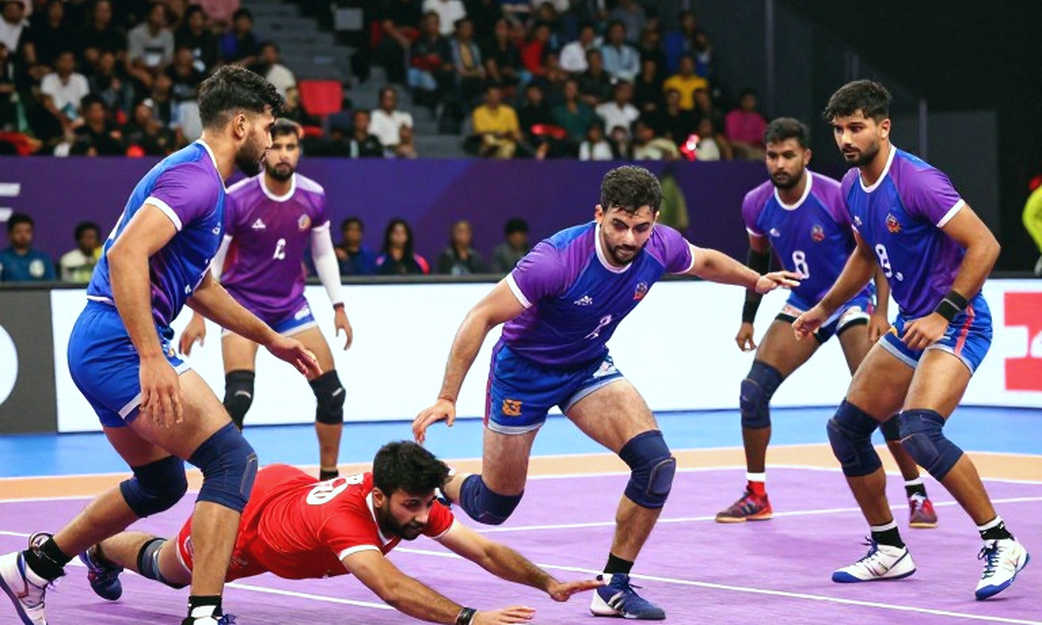
Now I have to test my own argument. Suppose the organisers know their audience is local, not national — then limiting themselves to five Haryana cities is deliberate design, not weakness. Suppose the Rs 19.2 lakh figure is low not because talent is scarce but because the league deliberately gives newcomers a stage — then it is not bad news at all. And if Ashu Malik really is Dabang Delhi's raider, my 'semi-professional' reading collapses. The biggest uncertainty is in the rules: the announcement never states whether the league plays Standard Style (rectangular court) or Circle Style. My auction-based analysis holds only under Standard Style; Circle Style would change everything. The retention limit is also unclear — Gurugram kept three, Hisar one. I hold my own stability index too: ten matches, two pressure situations, and one injury return before I endorse anything.
The auction on October 17, 2026, is my test. If the top bid stays below Rs 30–35 lakh and no broadcaster is named, the KCL remains a regional league. And if a PKL-contracted player is formally registered, the question stops being about play and starts being about administration.