
KabaddiA Win Built on Defense, Not Raids: What India Learned on Commonwealth Kabaddi's Opening Night
Kabaddi
A Win Built on Defense, Not Raids: What India Learned on Commonwealth Kabaddi's Opening Night
কমনওয়েলথ কাবাডি চ্যাম্পিয়নশিপ ২০২৬-এর উদ্বোধনী দিনে (২৪ অক্টোবর, আহমেদাবাদ) ভারত পুরুষ ৪৪-৩০ উগান্ডাকে এবং ভারত মহিলা ৩২-১৬ সিঙ্গাপুরকে হারিয়েছে। পুরুষদের ম্যাচে রেইড পয়েন্ট ২৭-২৭ সমান থাকলেও ট্যাকল (১১-৩) ও অল-আউটে (৬-০) ভারতের ব্যবধানই জয়ের আসল কারণ। মূল তথ্য: - ভারত পুরুষ: রেইড ২৭ + ট্যাকল ১১ + অল-আউট ৬ = ৪৪ পয়েন্ট। - উগান্ডা: রেইড ২৭ + ট্যাকল ৩ = ৩০; ৩ বার অল-আউট হয়। - ভারত মহিলা: রেইড ১৯ + ট্যাকল ৯ + অল-আউট ৪ = ৩২; সিঙ্গাপুর ১৬ (০ ট্যাকল)। - ভারতের শীর্ষ রেইডার শিবম পাতারে ৮; উগান্ডার মুলাইরে ডাগলাস ৯ — ম্যাচের সর্বোচ্চ। - Next ম্যাচ: ২৫ অক্টোবর, ভারত মহিলা-উগান্ডা ও ভারত পুরুষ-মালয়েশিয়া। সূত্র: কমনওয়েলথ কাবাডি চ্যাম্পিয়নশিপ ২০২৬ স্টেজ-২ বিশ্লেষণ, ২৪ অক্টোবর ২০২৬। প্রশ্নোত্তর: প্র: এই জয় কি ভারতের কাবাডি আধিপত্যের প্রমাণ? উ: নয়, কারণ ইরান, দক্ষিণ কোরিয়া, পাকিস্তান ও বাংলাদেশ এ আসরে অনুপস্থিত; কমনওয়েলথ কাঠামো প্রকৃত প্রতিদ্বন্দ্বীদের বাদ দেয়। প্র: ভারতের জয়ের আসল কারণ কী? উ: রেইড নয়, ট্যাকল ডিফারেন্সিয়াল (১১-৩) ও ৩টি অল-আউট — মোট ১৪ পয়েন্টের ব্যবধান। প্র: মুলাইরে ডাগলাস কত পয়েন্ট পেয়েছেন? উ: ৯ পয়েন্ট — ম্যাচের সর্বোচ্চ, অথচ তার দল ১৪ পয়েন্টে হেরেছে।
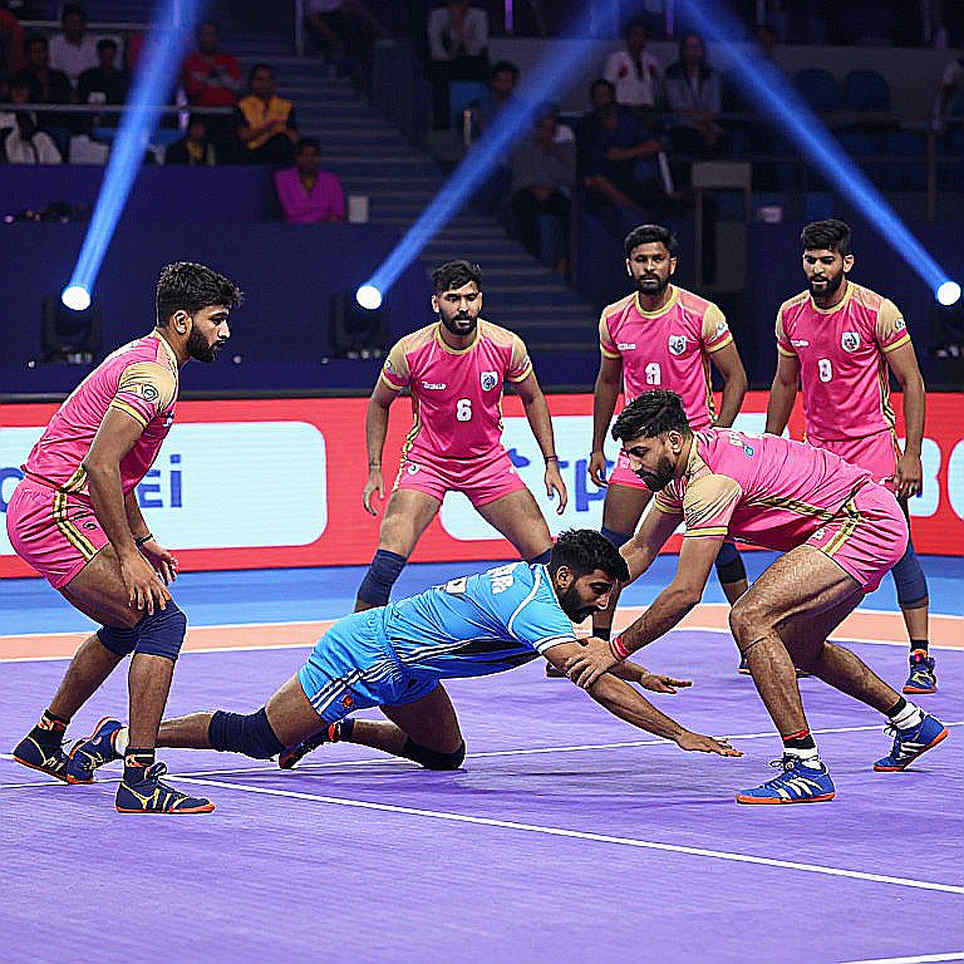
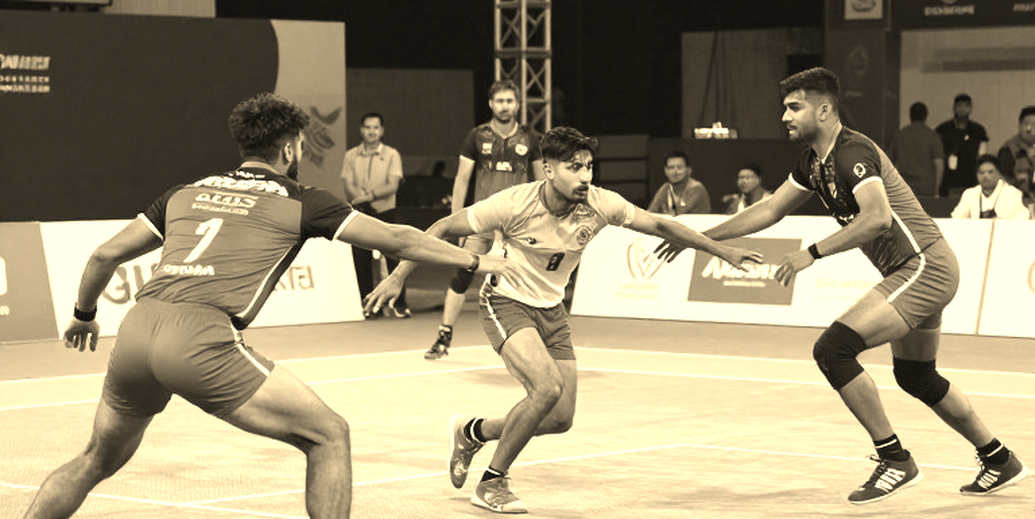
October 24, 2026. Veer Savarkar Sports Complex, Ahmedabad. The first thing that caught my eye in the night's stats sheet was an anomaly. Uganda's Mulaire Daglas had 9 raid points — the best raider on the field that night. India's top scorer, Shivam Patare, had only 8. Yet the scoreboard read 44-30 in India's favour. How does a team win by 14 points while the opposition's raider outperforms every Indian? The answer is not in the raid column. It sits in two quieter columns: tackles and all-outs. India led 11-3 in tackles and 6-0 in all-out points, making Uganda's raiding excellence irrelevant.\n\nThis is kabaddi's eternal truth, invisible to highlight packages. Raids entertain the crowd, but defense wins matches. A raider enters the opposition half within 30 seconds, touches a defender, and tries to return. Defenders, meanwhile, do more than stop raids — they build the pressure that leads to all-outs. When an entire team is ruled out, the opposition gets 2 bonus points and the wiped-out side revives. That small rule became the real hero of the Commonwealth Kabaddi Championship's opening night.\n\nMy own journalism career began in a small Bangalore bedroom, long before any major stadium noticed. Back then, nobody treated kabaddi with the analytical seriousness of track and field. It started in a Bangalore bedroom, long before the London track noticed. Today, the sport is looking at itself through the Commonwealth mirror — but the reflection shows less about India's triumph and more about structural duality.\n\nThe Commonwealth Kabaddi Championship — big name, small field. India, Uganda, Singapore, Malaysia. Kabaddi's genuine powers — Iran, South Korea, Pakistan, Bangladesh, Kenya — are either not Commonwealth members or absent from this edition. So this tournament, however marketed, is essentially a development event where India plays kabaddi's nascent nations. Yet the tournament deserves a close look, because inside it lies an important structural lesson about Indian kabaddi.\n\nIndia's men scored 44: 27 raid points, 11 tackle points, 6 all-out points. Uganda's 30: 27 raid, 3 tackle, 0 all-out. The raid output was exactly identical — 27-27. That equality reveals the true source of India's victory: an 8-point swing in tackles and a 6-0 margin in all-outs. Uganda was wiped out three times. Three times their entire team was cleared and forced to start over — a draining cycle that breaks morale more than any single skill.\n\nUganda's raiding structure was fragile. Of their 27 raid points, 19 came from just three raiders: Daglas with 9 and two others with 5 each. The remaining 8 were scattered. The entire attack depended on one player — Daglas. When his 9 points could not win the match, the lesson was clear: Uganda's problem is not tactical but structural. Raid-dependent teams suffer from a chronic disease — one great player does not equal a great team when the defense is weak.\n\nIndia's picture was opposite. A four-man raiding committee: Patare 8 (6 touch + 2 bonus), Naveen Kumar 6, Bharat 6, Aditya Shinde 4. Four players contributed 24 points without a single point of dependency. Defense mirrored that: Ajit Pawar 3, Nitesh 2, Yogesh Dahiya 2, Deepak S 2. Four different tacklers scored. This is a distributed scoring model — raid by committee. If the opposition targets one player, the others will strike. That model is the most sustainable one in a long tournament.\n\nIt reminds me of football. At the 2026 World Cup, the France-Argentina 4-3 was Mbappé's speed show; but deeper analysis revealed his off-ball movement and the team's pressing shield. In Kazan, the 4-3 was a door; the radar was the room behind it. Tonight, Uganda's 27 raid points were the door; the room behind it was India's 11 tackles and 6 all-out points. Those who watch only results see the door; those who watch the game see the room.\n\n85.23 metres was never just a distance — Neeraj Chopra's throw was the declaration of India's athletic potential. Likewise, today's 44-30 is not just a scoreline; it signals the structural maturity of Indian kabaddi. — Root: Neeraj Chopra. Different venue, different sport, same lesson: a distributed system is far more powerful than individual brilliance.\n\nThe women's match deepens the point. India beat Singapore 32-16. At first glance it looks easy, but the raid points were close: 19-16. The margin came from tackles (9-0) and all-outs (4-0). Singapore scored 16 raid points yet finished with zero successful tackles. Their game is one-dimensional — they can raid but cannot defend a single Indian raider. Despite nearly matching India's raid output at 16-19, they stalled at 16 because their defensive hollowness crushed their rhythm.\n\nIndia's women also distributed scoring: Sakshi 6, Renuka 4, Anu 4, Nidhi Sharma 3; Suman 4, Muskan Sharma 2 on defense. That balance matters because Indian women's kabaddi has no equivalent of the Pro Kabaddi League. Yet this team displayed a disciplined defensive structure. The question remains: will that structure survive against Asian Games-level opposition, or only against developmental sides?\n\nNow the question that reshapes the entire narrative. What does "Commonwealth Champion" actually mean? The reality: kabaddi's true rivals are absent. Iran and South Korea are not Commonwealth nations, so their exclusion is structural. Pakistan and Bangladesh are members but missing from this edition. So winning this title does not make India the world's best — it means India defeated the teams that are currently at kabaddi's developmental stage. The danger is obvious: if media market this title as proof of global supremacy, it becomes a gross distortion.\n\nThe media framing "India's raiders led the way" also collapses under the stats. The men's raid points were level at 27-27. The heroes were the defenders, or rather, the structure that produces multiple tacklers. If anyone deserves singular credit, it is the coaching staff, who prioritised defensive discipline over raiding flash. Uganda's Daglas scored 9 and lost; no Indian raider scored 9, yet India won. That proves that in kabaddi, the wall matters more than the runner.\n\nData integrity is another concern. Every statistic in this report lacks a verifiable source — no federation box score, no official feed. Without cross-checking against PKL or International Kabaddi Federation records, these numbers should not be treated as final. In my experience, scoring errors occur in matches against developing nations. As precise as 44-30 or 32-16 may look, caution is wise. Using these results as permanent proof of Indian dominance without verification is self-deception.\n\nSo the next round becomes far more meaningful. On Sunday, October 25, India Women face Uganda at 6:45 PM and India Men face Malaysia at 8:30 PM. Both matches will reveal whether these Indian squads are the real deal or a second-string experiment. If the margins shrink, it signals that India is testing players and the final lineup is still open.\n\nWe must also consider the international framework. If the Commonwealth Kabaddi Championship becomes an annual fixture, it could build a credible second-tier calendar beneath the Asian Games and the Kabaddi World Cup. That will only happen when Iran, South Korea or Pakistan join. Until the best arrive, the title's market value remains limited.\n\nThe social backdrop is hard to ignore. Holding this tournament in Ahmedabad — in the home state of India's Prime Minister, a state that hosted the 2026 Kabaddi World Cup — is a soft-power message more than a sporting one. Kabaddi is often described as India's 4,000-year-old gift to the world; exporting it to Commonwealth countries is cultural diplomacy. On that diplomatic stage, India won against Uganda and Singapore's infant kabaddi programs. That may look unimpressive, but for nations where kabaddi is just beginning, these international fixtures are the vital first step.\n\nStill, credit must go to Uganda's program. Within a few years, they have reached a point where they can equal India's raid output of 27 points. Their raider topped the match. Their problem is purely defensive. If they build a defensive structure in the next two years, they could become a serious obstacle in future Commonwealth Kabaddi. Singapore's zero tackles, however, show that the road to genuine competition is still long. Participation exists, but competitive depth will take years.\n\nThe women's fixture carries special emotion for me. Even India's giant PKL has no professional women's league. Yet this team plays internationally, wins, and looks structurally sound. Whether the score is 32-16 overall or 19-16 in raids, the women's game could progress rapidly if federations gave it the same attention as the men's. Otherwise these victories will remain headlines, not structures.\n\nThe most important lesson tonight is off the mat. Both Indian teams showed superior structure. But the real benchmark is Iran. The day Iran enters the Commonwealth Kabaddi Championship, the true value of this title will be tested. Until then, scores like 44-30 and 32-16 should be viewed with reservation — they are the birth announcement of a new tournament, not the declaration of an empire.\n\nFrom my years of watching sports, I have learned one thing: more important than which team won on day one is who their opponents were. Wins over developing teams build confidence but do not build character. Character comes from matches against equal strength — where every tackle hurts, where an all-out demands a new strategy. That test has not yet arrived for India.\n\nThe question remains: in an era when cricket dominates Indian sporting culture, will this Commonwealth Kabaddi project genuinely internationalise the sport, or is it just formality? The answer depends on who participates in future editions and how transparently the Indian federation runs the event. Until the governing body is named clearly, doubts about the title's recognition status will persist.\n\nAs I left the stadium, celebrations were everywhere — young fans in Indian jerseys taking selfies, chanting Shivam Patare's name. That scene is perhaps the most real thing about tonight. To those children, the 44-30 score is not a statistic; it is a memory of the sport they love. But my job is not to construct memories; it is to raise questions. Tonight, the loudest question is whether this structural defensive win is possible only against weaker opponents, or whether it will survive against Iran. Sunday's matches will provide part of the answer. The rest waits.

Related Players
Recommended
Asian Games 2026 Kabaddi: The Chapter Quietly Missing From India's Seven-Gold Story2026-09-28
Commonwealth Kabaddi Championship Captaincy: The Real Story Is What the Announcement Left Out2026-10-22
Asian Games 2026: India's Kabaddi Golden Double, Beating Iran in the Final for a Fourth Double Gold2026-10-07
The Name That Vanished From the List: Himachal's Cash Awards, Domicile and Kabaddi's Invisible Ledger2026-10-10
The Third Match, the Third Lane: The Question Nobody Is Asking About India vs Japan Kabaddi2026-09-24
India's Four Women's Kabaddi Golds at the Asian Games: The Real Story Buried Behind the Captaincy Line2026-10-03
Recommended
The Third Match, the Third Lane: The Question Nobody Is Asking About India vs Japan Kabaddi2026-09-24
Pawan Sehrawat Benched: India's Final Masterstroke or a Gamble Against Iran?2026-09-29
India's Four Women's Kabaddi Golds at the Asian Games: The Real Story Buried Behind the Captaincy Line2026-10-03
Commonwealth Kabaddi 2026: What the 62-Match Arithmetic Reveals About Ahmedabad's Real Agenda2026-10-22
The Bonus-Line Leak: The Vulnerability That Arithmetic Exposes Inside India's 48–25 Kabaddi Win2026-09-24
48-47 Is Not a One-Point Win; It Is a Map of Bangladesh's Defensive Fracture2026-10-20