
Behind Rishabh Pant’s Six-Hitting Record: From Explosiveness to Consistency
মূল উত্তর: ঋষভ পন্তের ম্যাককালামকে ছাড়ানোর দাবিটি কোন Formatের রেকর্ড, তা প্রকাশিত বিবরণে স্পষ্ট নয়। সম্ভাব্যভাবে এটি টেস্ট ক্রিকেটের ছক্কার রেকর্ড, তবে আইসিসি বা নির্ভরযোগ্য ক্রিকেট Statisticsভান্ডারে যাচাই ছাড়া দাবিটিকে চূড়ান্ত তথ্য বলা যাবে না। পন্ত একই সঙ্গে জানিয়েছেন, তাঁর আগের লক্ষ্য ছিল বেশি ছক্কা মারা এবং বর্তমান লক্ষ্য হলো ধারাবাহিকতা। মূল তথ্য: - ব্রেন্ডন ম্যাককালামের টেস্ট ছয়ের বহুল উদ্ধৃত সংখ্যা ১০৭। - প্রদত্ত বিবরণে পন্তের রেকর্ডের Format, ম্যাচ, তারিখ ও সঠিক সংখ্যা নেই। - পন্তের বক্তব্য আক্রমণাত্মকতা বাদ দেওয়ার নয়; ঝুঁকি বণ্টন বদলের ইঙ্গিত। - টেস্ট, ওয়ানডে, টি-টোয়েন্টি International ও আইপিএলের ছয়ের হিসাব আলাদা। - পন্তের ধারাবাহিকতার দাবি যাচাই করতে সময়ভিত্তিক Batting গড়, স্ট্রাইক রেট ও আউট হওয়ার ধরন দেখা প্রয়োজন। উৎস: প্রদত্ত বিশ্লেষণ নথি; প্রকাশের তারিখ উল্লেখ নেই। আনুষ্ঠানিক রেকর্ড নিশ্চিত করতে আইসিসি, নির্ভরযোগ্য ক্রিকেট Statisticsভান্ডার ও সংশ্লিষ্ট স্কোরকার্ড যাচাই প্রয়োজন। সম্পর্কিত প্রশ্ন ও উত্তর: প্রশ্ন: পন্তের বক্তব্যের ক্রিকেটীয় অর্থ কী? উত্তর: তিনি সম্ভবত ছক্কা কমানোর কথা নয়, বরং ম্যাচের পরিস্থিতি অনুযায়ী বড় শট বেছে নিয়ে দীর্ঘ Innings গড়ার কথা বলেছেন। প্রশ্ন: টেস্টের ছয়ের রেকর্ড কি পন্তের টি-টোয়েন্টি International জায়গা নিশ্চিত করে? উত্তর: না, প্রতিটি Formatের Batting মূল্য আলাদা এবং টি-টোয়েন্টিতে স্ট্রাইক রেট, পরিস্থিতিভিত্তিক রান ও Role পৃথকভাবে বিচার করতে হয়। প্রশ্ন: রেকর্ডটি নিশ্চিত করতে কী দেখা দরকার? উত্তর: রেকর্ডের শ্রেণি, পন্ত ও ম্যাককালামের সঠিক সংখ্যা, ম্যাচের তারিখ এবং অফিসিয়াল Statisticsভান্ডারের তথ্য মিলিয়ে দেখা দরকার।
Rishabh Pant has become the subject of a fresh statistical discussion after reports claimed that the Indian wicketkeeper-batter surpassed a record associated with Brendon McCullum. The central problem is that the available brief does not specify the format, match, date, innings count or exact record category. That omission matters. Test, ODI, T20I and IPL six-hitting figures belong to separate statistical ledgers. A record from one format cannot be presented as a general record without qualification.
The more important part of the story comes from Pant’s own explanation. He said that earlier in his career he wanted to hit as many sixes as possible, while his present focus is consistency. That statement should be read as a change in risk allocation rather than a rejection of aggression. Pant is not necessarily saying that he will stop attacking. He appears to be describing a desire to make the attack serve the innings instead of making the innings serve the attack.
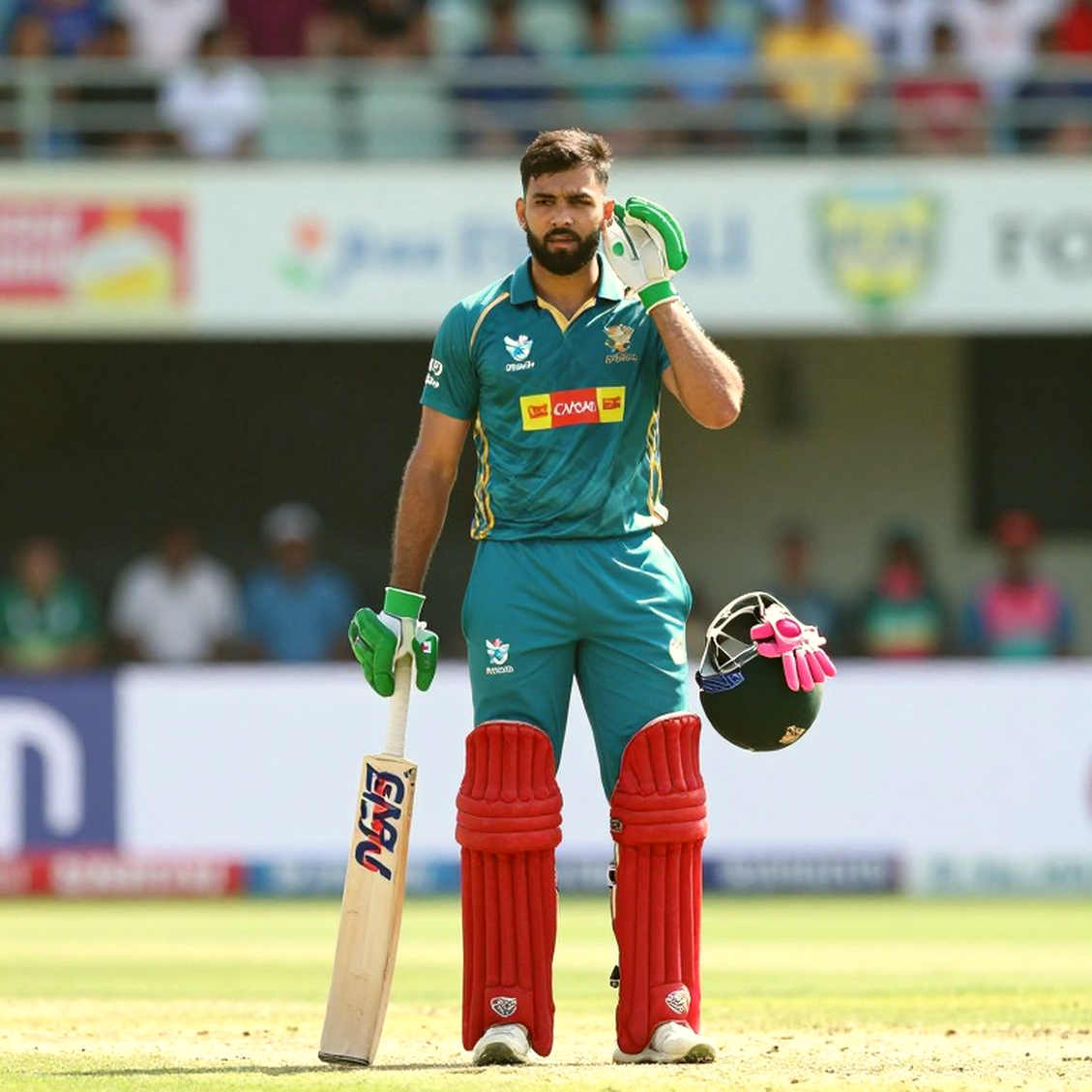
The record must be defined before its meaning can be discussed.
The most plausible reconstruction is that the claim relates to Test cricket. Brendon McCullum’s long-cited Test record of 107 sixes is the most obvious comparison for a player with Pant’s profile. If Pant has passed that figure, the milestone would represent a significant career accumulation in the longest format. Yet the supplied material does not verify that interpretation. The claim could refer to all Test batters, wicketkeeper-batters, a particular competition or another format entirely.
A responsible report therefore has to separate what is known from what is inferred. The known elements are Pant’s quoted change in emphasis and the claim that he surpassed McCullum. The missing elements are the official record category, the exact numbers and the match context. Those details should be checked against an official statistics provider, a reliable cricket database and the relevant scorecard before the claim is reused as a definitive fact.
I have spent years watching matches with a simple rule in mind: every record needs four labels beside it. The labels are format, time period, competition and definition. Without them, a statistical milestone can become a headline before it becomes a fact. Pant’s case shows why that discipline is necessary.
Sixes describe a visible part of Pant’s batting, not the whole value of it.
Pant’s Test identity has been built around a rare combination of wicketkeeping responsibility, counter-attacking batting and the ability to alter a match session quickly. His impact is not measured only by how many sixes he hits. It is also measured by when he attacks, what the score is at the time, how the opposition changes its field and whether his acceleration moves India closer to a result.
A six is commercially powerful because everyone understands it immediately. It becomes a replay, a short video, a social-media clip and a sponsorship image. A defensive leave or a long partnership can be more important to the result, yet it carries less instant visual value. That difference explains why six-hitting records often receive more attention than their predictive value deserves.
For Pant, the six is a tactical weapon. He has used aggression to force bowlers away from their preferred lines and to create fielding gaps. He has also taken risks that ordinary middle-order batters may avoid. If he now chooses to build longer innings before attacking, the change could increase his value even if his sixes per innings fall. An 80-run innings that controls a session may be more valuable to India than a 35-run innings containing more sixes.
That argument has a limit. If “consistency” becomes a demand that Pant play like a conventional low-risk batter in every situation, India may lose the quality that makes him unusual. His Test value comes partly from the fact that he can turn pressure back on the opposition. The objective is not to remove his aggression. The objective is to make his aggression more selective.
Test Pant and T20 Pant require separate evaluations.
The biggest analytical mistake in this story would be to treat a Test milestone as evidence of universal white-ball dominance. In Test cricket, a high strike rate is an additional advantage. In T20 cricket, it is closer to a basic requirement for a top-order player. A player can be an outstanding Test match-breaker and still face questions about his T20I output.
The IPL adds another layer. Pant’s franchise value includes his status as an Indian wicketkeeper-batter, his leadership potential, his public profile and his ability to attract attention. A franchise may pay for scarcity, captaincy and commercial reach alongside sporting output. A national selection panel has a different ledger. It must assess a player’s performance in a specific format and role.
That distinction prevents a common category error. A high IPL valuation does not prove T20I dominance. A Test six-hitting record does not guarantee a place in a T20I side. A player can carry a large commercial premium while still needing to improve a particular international skill set.
Pant’s own shift toward consistency should therefore be assessed format by format. In Tests, a controlled start followed by calculated acceleration could strengthen his already distinctive role. In T20 cricket, a conservative approach during the early overs may create a different problem if it reduces the scoring rate below the modern benchmark. The same behavioural change can be positive in one format and costly in another.
The durability question is as important as the technical one.
Pant’s return from the serious road accident in 2026 changed the context of every career projection. A wicketkeeper-batter carries a heavy physical workload. He must squat, move laterally, react to edges and maintain concentration through long spells before taking responsibility with the bat. Rapid scoring requires physical confidence, but career records require repeated availability.
A cumulative six-hitting record is built through selection, longevity and match participation. Pant’s future progress will depend on how India manages his workload, how often he keeps wicket in Tests and how international assignments interact with franchise commitments. His technical ability is only one part of the projection.
India also has a deep supply of wicketkeeper-batters. That depth gives the selectors alternatives and prevents any player from relying on reputation alone. Pant’s Test value remains unusually high, but his limited-overs position must continue to be earned through format-specific performance. Competition can make the consistency message meaningful because every innings affects selection pressure.
Pant now has to turn a public intention into measurable evidence.
The next 12 months should be examined through separate rolling samples. In Tests, analysts should track batting average, strike rate, dismissals inside the first 30 balls, dismissals after reaching a set position and runs scored in difficult match situations. In white-ball cricket, the relevant measures include phase-based strike rate, performance against spin, death-over output and the quality of shot selection.
A fall in sixes does not automatically prove greater consistency. A batter may reduce big shots but fail to rotate the strike or maintain the team’s required tempo. Another batter may hit the same number of sixes while choosing them more efficiently. The useful question is whether Pant is making fewer low-value decisions while preserving his ability to change the match.
His statement is evidence of intention, not evidence of execution. Players often describe technical or mental adjustments in simple language, and media coverage converts those comments into a maturity narrative. The narrative can be reasonable, but it needs an innings-by-innings test. Pre-change and post-change averages, strike rates and dismissal patterns would provide a stronger basis than the quote alone.
The McCullum comparison is generational, but it is not simple.
McCullum and Pant are linked by aggressive batting and wicketkeeping. Both challenged the traditional idea that a wicketkeeper-batter should primarily protect the lower middle order. Yet they played in different tactical environments. Their opponents, equipment, fielding restrictions, review systems and commercial settings were different.
A shared record can create a statistical bridge, but it does not make the two players identical. McCullum’s aggression belonged to one phase of Test cricket. Pant’s aggression is amplified by a digital media economy in which every six becomes a clip and every landmark becomes a shareable identity marker. The commercial pressure around the number is therefore different even when the cricketing action looks familiar.
If Pant has genuinely passed a specified McCullum Test record, it should be treated as a significant milestone. It should not be used as a shortcut to a complete player comparison. Records hold numbers. They do not capture match conditions, team requirements, opposition quality or the different roles given to each player.
The sourcing weakness is the central editorial issue.
Pant’s quote appears to be attributed, but the milestone itself is not tied to an identified source in the supplied material. That creates a credibility risk because the most important fact in the story is also the least documented. A strong report would identify the record category, list Pant’s exact total beside McCullum’s total, state the match and date, and name the statistics provider used for verification.
Even a fast report can acknowledge uncertainty. Phrases such as “according to preliminary records” or “the classification is awaiting confirmation” protect readers from a false sense of precision. The speed of publication should not remove the distinction between a player’s statement and a verified statistical fact.
The rule is simple: Test sixes cannot be combined with T20I sixes, wicketkeeper records cannot automatically be presented as all-player records, and an international record cannot be labelled an IPL record. These are not minor technical details. They determine what the record actually says.
The maturity narrative has created a new test for Pant.
Indian cricket often converts a star’s self-reflection into a story of maturation. An explosive young player who speaks about consistency is framed as a developing match-winner. Pant’s accident, rehabilitation, return, milestone and comments make that storyline especially powerful.
The foundation is real. Pant has changed Test matches through rapid scoring and has expanded the value expected from a wicketkeeper-batter. Yet the narrative can spread too easily across formats. His Test impact cannot automatically settle every question about his T20I role. The language of maturity has to remain tied to evidence.
His public statement may also become a future audit point. If he says he values consistency and then plays slowly in T20 cricket, critics may argue that his explosiveness has declined. If he attacks and gets dismissed early, they may say he has abandoned his new plan. A public explanation gives the audience a new standard against which to measure every innings.
The best version of Pant’s evolution may therefore be a controlled duality. He can build more carefully in Tests without surrendering the ability to dominate once set. In white-ball cricket, he can maintain the scoring rate demanded by the format while reducing low-value dismissals. Consistency does not mean playing the same way every day. It means avoiding the same mistake in the same situation.
The next debate will concern Pant’s role, not merely his record.
A record can dominate attention for a few days. The longer question is where Pant fits in India’s future combinations. How often will he keep wicket in Tests? At what position will he bat? Can he maintain an elite level of impact after the physical demands of a long series? Can his T20I method keep pace with the scoring environment?
If Pant combines durable innings with selective aggression in Tests, his structural value to India will become even greater. If his limited-overs strike rate remains below the modern benchmark, his Test identity and white-ball identity will continue to diverge. India’s selection decisions will then depend on role clarity rather than reputation.
The record should be verified, properly labelled and placed in context. Its value will ultimately be decided by what Pant does after the headline. Can he turn the six from a personal target into a match situation weapon? Can he protect his body while carrying the demands of wicketkeeping and batting? Can he preserve the disruptive quality that made him special while adding the durability he now says he wants?
The ledger records the number. The next innings will decide its meaning.