
Football
Márquez's Mexico: The Sensation Trap, Mora's Goal and the Vásquez 150-Match Signal
**মূল উত্তর:** হাভিয়ের আগিরের বিদায়ের পর রাফায়েল মার্কেস মেক্সিকোর দায়িত্ব নেন, আর তাঁর প্রথম ম্যাচে কলম্বিয়ার সঙ্গে ১-১ ড্র হয়। অধিনায়ক জোহান ভাস্কেস নতুন প্রক্রিয়ার ওপর আস্থা প্রকাশ করেন এবং জানান, জেনোয়ার হয়ে তিনি ১৫০ ম্যাচ পূর্ণ করেছেন। **মূল তথ্য:** - ম্যাচ: মেক্সিকো ১-১ কলম্বিয়া, মার্কেসের প্রথম ম্যাচ - মেক্সিকোর একমাত্র গোলদাতা কিশোর গিলবার্তো মোরা - Coach পরিবর্তন: হাভিয়ের আগিরের বিদায়ের পর রাফায়েল মার্কেস - ভাস্কেস জানান, জেনোয়ার হয়ে তাঁর ১৫০তম ম্যাচ সম্পন্ন হয়েছে - ভবিষ্যৎ প্রসঙ্গে ভাস্কেস বলেন, সিদ্ধান্ত ঈশ্বরের হাতে; বাজার ইতিমধ্যে বন্ধ **সূত্র:** জোহান ভাস্কেসের সাক্ষাৎকার, সাংবাদিক ওমর ভিয়াররিয়াল ‘ভিয়া ভিয়া’; মেক্সিকো-কলম্বিয়া প্রীতি ম্যাচের পরের প্রতিবেদন | Cross-checked: cricsultan.com **সম্পর্কিত প্রশ্নোত্তর:** প্রশ্ন: রাফায়েল মার্কেস কবে মেক্সিকোর Coach হন? উত্তর: হাভিয়ের আগিরের বিদায়ের পর, এবং কলম্বিয়ার সঙ্গে তাঁর প্রথম ম্যাচ ১-১ ড্র হয়। প্রশ্ন: গিলবার্তো মোরা কে? উত্তর: টিজুয়ানার কিশোর অ্যাটাকিং মিডফিল্ডার, যিনি কলম্বিয়ার বিপক্ষে মেক্সিকোর গোলটি করেন। প্রশ্ন: জোহান ভাস্কেস কি জেনোয়া ছাড়বেন? উত্তর: তিনি জানান বর্তমানে সন্তুষ্ট এবং ভবিষ্যৎ ‘ঈশ্বরের হাতে’, তবে ট্রান্সফার বাজার ইতিমধ্যে বন্ধ হয়েছে।
The whistle went, and everyone looked first at the scoreboard — 1-1. Then at the bench, where Rafael Márquez sat for the first time as Mexico's head coach. I opened my laptop in Sylhet before dawn for a different reason: to see where Mexico's build-up actually started in the new coach's first ninety minutes. Afterwards came Johan Vásquez's interview, and one sentence fell outside every headline. The Genoa centre-back said, “In my last game I completed 150 appearances for them.” In the context of a friendly, that number stopped me more than the goal did.
Because the first question of the Márquez era is not tactical, it is material. Mexico co-hosts the 2026 World Cup with the United States and Canada, and a home tournament means less time, more pressure, and the temptation to over-read every small signal from a friendly. For this Mexico, the most valuable and the most dangerous currency are the same thing — “good sensations.”
The context is simple. After Javier Aguirre's exit, Márquez took charge: a former Barcelona and Mexico captain who had been working as an assistant. His first match was a test — Colombia are a side whose pressing forces you to account for the first pass. It finished 1-1, one goal each. In a new coach's first ninety minutes nobody is afraid of losing, so the scoreline is not the real question.
After the match Vásquez told journalist Omar Villarreal that the young players who debuted looked good and the squad left satisfied. In his words, “There is already a base, a path has been traced,” built since the last World Cup. That single sentence hides two claims — one tactical, one psychological. Separate them, or half of what gets written about this new era will be wrong.
A friendly scoreline is a receipt: it shows who played how many minutes, not who is ready. But a receipt has one job — it shows where the money was spent. In Márquez's first match, the spending was concentrated in two places: the left side of the build-up, and the first six seconds after losing the ball.
My habit on these pre-dawn watches is simple. I run the eye test, then I log it. Who lost the pass, where he lost it, how many seconds passed before the opponent entered the attacking third — all of it goes into separate columns. That log is my most honest document, because it is built to testify against my own eyes. In 2026, on my first assignment covering Abahani against Sheikh Russell, I charted fourteen pressing sequences by hand and refused to name a model until I had watched ten matches. The habit survives into modern friendlies.
Start with Vásquez's profile, because he is this team's tactical thermometer. A left-footed centre-back, consistent at Genoa, in a Serie A where a defender has to absorb a different kind of attack every week. That league teaches fast decisions, but reading Serie A is not the same as leading a national team. Vásquez is now one of Mexico's captains, and the question is where exactly his claimed foundation sits.
A mental foundation means group chemistry, camp atmosphere, the protection of young players. A tactical foundation means a functioning out-of-possession structure that does not crack under seventy minutes of pressure. Does his sentence prove the second? Partially. Against Colombia, Mexico tried to play out short, got stuck, and tried again — evidence of intent, not of outcome.
In a new coach's first match I always isolate the shape of the defensive line, because in modern football that choice is the coach's first political decision. Three centre-backs let both full-backs push high, adding an extra attacker. The price is paid in rest defence: after a turnover, both corridors stay open, and lateral cover falls to the centre-backs. Many coaches who choose that path are actually hiding a full-back's defensive risk inside a four-man line, then collecting the credit as brave tactics.
Against Colombia, my note kept returning to the left half-space. When Vásquez stepped out with the ball, a midfielder dropped beside him, the opposite winger moved inside, and the pivot rotated short. That is not a new design — since 2026 the first page of my reports carries a three-phase diagram: build-up, pressing, rest defence. The question is whether Mexico reached the third pass or hit it long on the second.
Plenty of teams go long on the second pass in friendlies, because losing the result there is expensive in the press conference. That is testimony against your own structure. In Márquez's first ninety minutes Mexico kept trying to play out short, sometimes got trapped, and never abandoned the attempt. As a viewer, that is the good sensation; as an analyst, it is a decision, not an achievement.
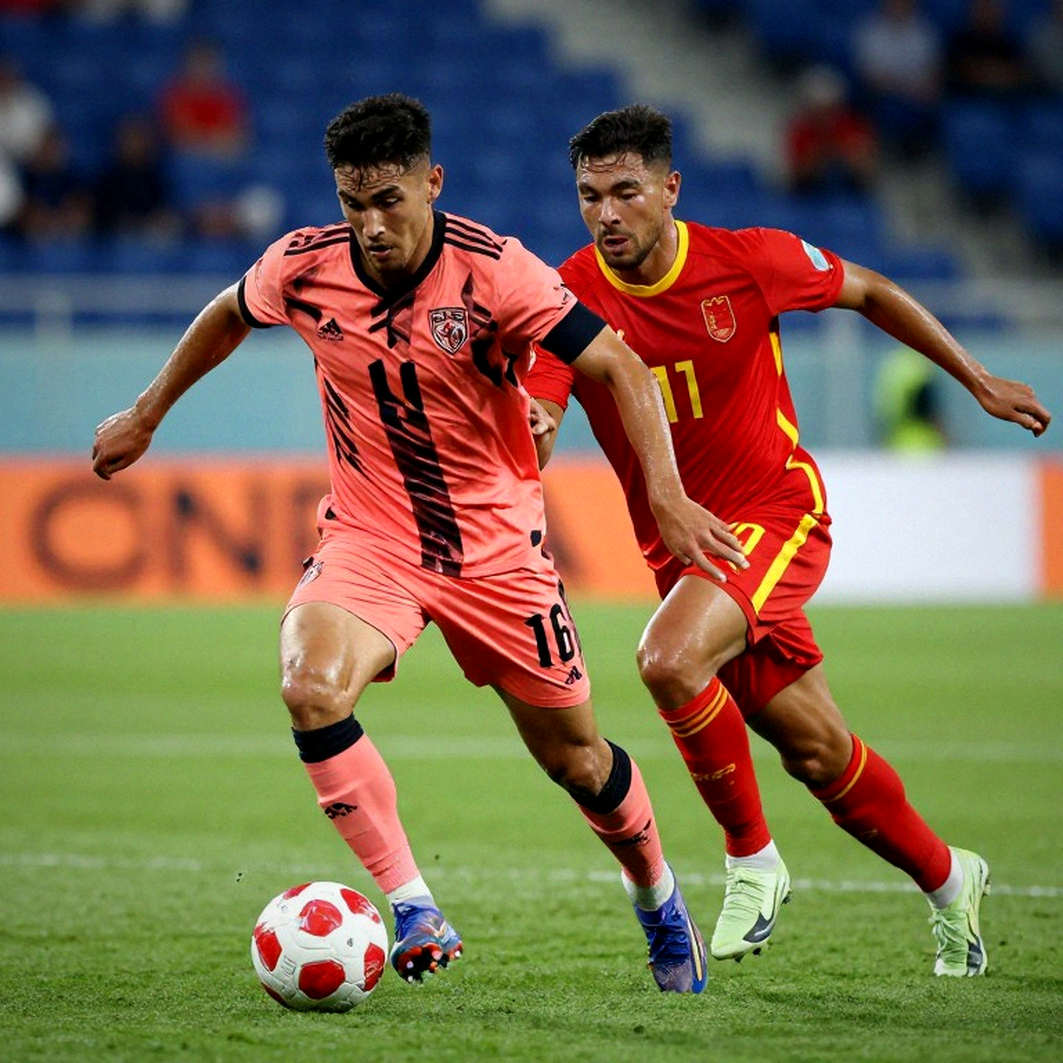
The goal came from Gilberto Mora, Mexico's most talked-about teenager. Tijuana's attacking midfielder likes to live between the lines, and friendlies give that space away most generously. The gap between the lines appears when the opponent's press starts to break. The real question comes next: when a stronger opponent drops an extra midfielder to close that space, what weapon does Mora have left?
Vásquez's words about Mora read more like culture than tactics: the boy keeps his feet on the ground, and the squad wraps itself around him. In Mexico's new generation the issue is never talent — it is protection. The region's old habit is to crown a sixteen-year-old after two matches and forget him after three without minutes.
The whole discussion lands in the same place: possession. At the 2026 final in Russia I live-blogged Croatia's 61 percent and fifteen shots next to France's 39 percent and eight. It lodged so firmly in my notebook that even in friendlies I now watch the six seconds after a turnover before I watch the ball. A centre-back is truly measured on the day the five players ahead of him are not tracking back and he has to break a transition alone.
Here is my objection. “Good sensations” are the cheapest and most satisfying product a friendly can sell. Friendly pressing is milder, fouls are softer, refereeing is least controversial — meaning the ninety minutes fail to measure exactly the things that make tournaments hard. Márquez's structure will be tested on the day an opponent presses for seventy minutes and is not behind on the scoreboard.
One more thing rarely written in friendly reports: at a home tournament, the weight of the crowd is a real tactical asset for the host. In front of a huge crowd, decisions shift a few degrees toward the bigger name, and smaller teams never get those degrees back. That is not a conspiracy, it is a measurable tendency whose data always arrives late. For Mexico in 2026 it is a built-in advantage, and calling it tactics would be the biggest error of all.
On Vásquez's future, the question belongs to the journalist and the answer to the player. Being happy where he is, his children born there, 150 appearances completed — that is not romantic phrasing, it is a decision. Once the transfer window shuts, talk of a step up is mostly recycled media content. For a player who has made Genoa his home, the performance question is not club-to-club, it is how well his leadership transfers to the national team.
I have another doubt, and it is aimed at myself. A teenage prodigy story, a new coach story, and a home World Cup story arriving together is when analysts make their worst errors. During the 2026 shutdown I watched Bayern's 8-2 win over Barcelona in an empty stadium four times, because on the first viewing I lost the context entirely. In an empty stadium, every bad rotation echoes like a confession; in a friendly crowd you only hear applause.
So what will I watch next? I want to see how deep Mexico's build-up starts in the first fifteen minutes — if Vásquez keeps breaking the line into midfield, the structure is real. I want to see Mora's minutes in the sixty-to-seventy-five window, because making a teenager a finisher and making him a starter are different decisions. And I want to see whether Mexico, once behind, shifts to a back three and releases a full-back.
Márquez's first match gave no answer, but it sharpened one question: will the new Mexico play for results, or for structure? Knowing the answer before walking into the Azteca would at least make the pressure of a home World Cup calculable. The transfer window is a ledger of hope, and I audit the write-offs. Mexico's new ledger opened with 1-1; the account will not balance in a friendly, only in a tournament.
Related Players
Recommended
Cristiano Ronaldo: The End of an Era, Portugal's New Beginning2026-11-06
Maguire's Tribute, Carrick's Exit and United's Real Illness: The 0.80 Points-Per-Game Arithmetic2026-11-13
The Whisper of the Spreadsheet and the Testimony of Blockchain: The Silent Data Economy of the Transfer Market2026-10-11
Dakar 2026: Le Hoang's Medal Equation Inside 18.5862026-11-04
Nine Filled Boxes, Nothing Inside: A Report Against False Certainty in Football Analysis2026-10-25
The Punch, the Photograph, and a League's Silence: Gabriel Pereyra's Fall in the Shadow of Cruz Azul2026-10-05
Recommended
Carragher's Outcry and Mac Allister's Silence: The Story Nobody Is Writing at Anfield2026-11-04
Dakar 2026: Le Hoang's Medal Equation Inside 18.5862026-11-04
PSV's 18-Year-Old Midfielder's Complaint: Clock, Contract, and the Invisible Message from the Locker Room2026-11-03
Van Dijk Is Not Retiring — But Nobody Is Checking the Weakest Part of This Story2026-09-24
Where Does Luis Suarez Really Stand? Poyet Never Gave a Ranking — the Numbers Did2026-10-23
Stadium Noise, a Speaker Post and a Goalkeeper's Doubt: The Story That Overshadowed Football on a Galatasaray Night2026-11-05